About MANANAMEDINĪ
MANANAMEDINĪ (मननमेदिनी) is a peer-reviewed, open-access, bimonthly online research journal dedicated to the study of Sanskrit and allied fields of knowledge. The journal provides a scholarly platform for academicians, researchers, scholars, educators, and practitioners to share original, innovative, and rigorous research.
The journal welcomes research articles, review articles, and scholarly papers covering a wide range of subjects, including Āgamic Systems, Ancient Indian Sciences, Computational Linguistics, Contemporary Sanskrit Writings, Culture, Darśana, Epics, Grammar, History, Indian Aesthetics and Politics, Pāli and Prakrit Studies, Purāṇic Literature, Purāṇas, Religion, Sāhitya, Sanskrit Studies, Sanskrit Grammar and Linguistics, Sanskrit Lexicography, Sanskrit Literature, Scientific Traditions in Sanskrit, Veda and Vedic Studies, Buddhist Literature, Indian and Western Logical Systems, Indian Discourse Analysis, Indian Philosophy, Indian Socio-Political Thought, Indological Studies, Jain Literature, Hindu Astrology (Jyotiṣaśāstra), Manuscriptology, Navya-Nyāya, Language and Methodology, Indian Knowledge Systems (IKS), and other related areas of Indic and interdisciplinary studies.
“MANANAMEDINĪ” signifies the “churning of the intellect,” symbolizing deep reflection, critical inquiry, and intellectual exploration. True to its name, the journal seeks to foster a vibrant academic environment in which ideas are examined, debated, refined, and developed through rigorous scholarly engagement.
MANANAMEDINĪ is committed to promoting original and innovative research that explores the depth and diversity of human expression, culture, history, philosophy, literature, languages, sciences, knowledge traditions, and the arts. The journal aims to contribute to the advancement, preservation, interpretation, and dissemination of knowledge in Sanskrit and related fields while encouraging meaningful academic dialogue at both national and international levels.
Latest Published Research Papers
View All Archives (5) →6. Harappan Decline and Climate Change: A Review of Recent Research and Debates
This review paper examines the interdisciplinary research surrounding the decline of the Indus Valley (Harappan) Civilization with specific focus on mid-to-late Holocene climate change, shifting monsoons, and hydrological variations in Northwest India.
5. The Inter-relationship Between Sāṅkhya and Yoga Philosophy: A Critical Analysis
A philosophical and analytical inquiry into the ontological congruence and epistemological nuances connecting Sāṅkhya dualism with Pātañjala Yoga practice.
4. A Critical Study of the Third Canto of Buddhacaritam from an Epic Perspective
An in-depth literary assessment of Mahākavi Aśvaghoṣa's Buddhacaritam Canto III, evaluating poetic meters, alankāras, and narrative transitions in Mahākāvya tradition.
3. A Discussion on Tiṅ-arthas in the Sense of Kartṛ Based on Sāramañjarī
This paper analyzes the semantic import of verbal suffixes (Tiṅ-pratyayas) as agentive agency (Kartṛ) based on the commentary Sāramañjarī in Vyākaraṇa Śāstra.
2. Reflections on Tiṅ-Tattva from the Perspective of Śabdārtharatna
Explores the metaphysical and linguistic interpretation of verbal inflection in Navya-Vyākaraṇa according to Hari Dīkṣita's Śabdārtharatna.
Editorial Leadership
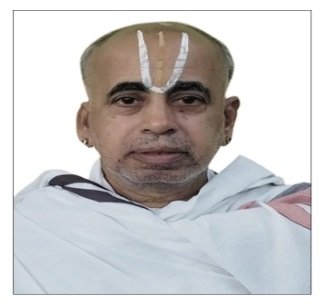
Prof. Dr. K.E.Dharaneedharan
Retired Professor
Department of Sanskrit, Pondicherry University (A Central University)
Puducherry, India - 605014
📧 Email: kedharaneedharan@yahoo.co.in
View Official Profile ↗
Dr. Subhankar Basak
Assistant Professor & Head
Department of Sanskrit, Kulti College, Kulti, Asansol
Paschim Bardhaman, West Bengal, India - 713343
📧 Email: subhankar.basak@kulticollege.ac.in
View Official Profile ↗